Egg Timer
This free online egg timer counts down the right time for boiled eggs: 6 minutes for soft, 8 for medium and 10 to 12 for hard, using large eggs lowered into boiling water. Pick your egg, lower the eggs in, press Start and an alarm tells you when to lift them out. Keep this tab open.
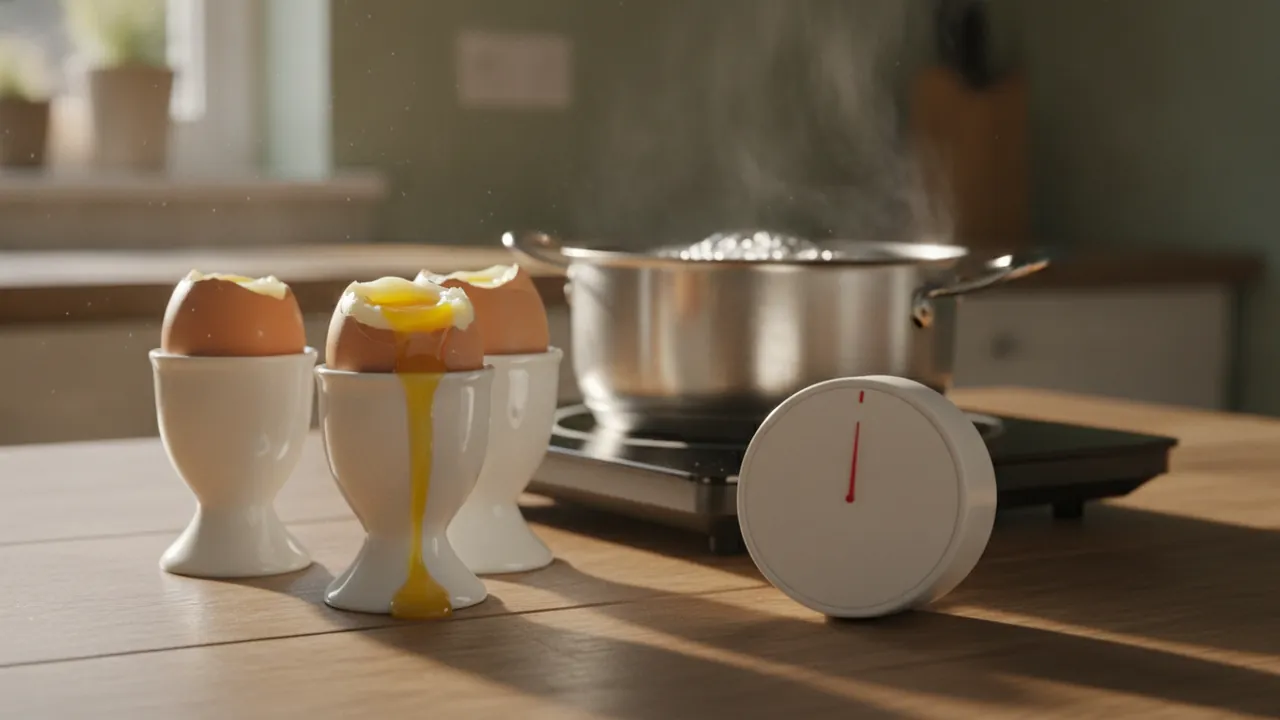
How to boil an egg with this timer
- Bring a pot of water to a steady boil, deep enough to cover the eggs by about an inch.
- Lower the eggs in gently with a spoon, so they do not crack against the pot.
- Choose the doneness above and press Start the moment the eggs go in.
- Keep the water at a gentle boil, not a rolling one, until the alarm sounds.
- Lift the eggs into a bowl of ice water. Press the ice bath button for a 5 minute timer.
The times assume large eggs. Eggs taken straight from the fridge, a smaller pot with more eggs in it, or a different size all shift the result by a minute or so, so use the first batch as a test and adjust the time next round.
Boiled egg times at a glance
| Doneness | Time | What you get |
|---|---|---|
| Soft | 6 minutes | Set white, runny yolk. Good for toast soldiers and ramen |
| Medium | 8 minutes | Set white, jammy yolk that holds its shape. Good on salads |
| Hard | 10 minutes | Firm white, fully set pale yolk. Good for sandwiches |
| Extra firm | 12 minutes | Firmest yolk, best for deviled eggs and meal prep |
These times match the ones most cooking sources agree on for large eggs in boiling water, followed by an ice bath of at least 5 minutes. USDA guidance for hard-cooked eggs describes a cold-start version: cover with water, bring to a boil, remove from the heat, cover and wait about 15 minutes for large eggs. Both give a fully set egg. The boiling-water method is easier to time, which is why this timer uses it.
Why an ice bath matters for boiled eggs
An egg keeps cooking from its own heat after you lift it out. Cooling it in a bowl of ice and water stops the yolk from overcooking, which is what causes the grey-green ring on a hard-boiled egg, and it makes the shell easier to remove. Leave soft eggs in for about a minute if you plan to eat them warm, and hard eggs for at least 5 minutes.
If you are timing more than eggs, the general online timer handles any length, and the online alarm clock is better for a time of day. A stopwatch is handy while you test how your own pot and stove behave.
Limits of a browser egg timer in the kitchen
This timer runs in your browser, so the tab has to stay open and the device awake, and the volume has to be up. A hidden tab can lag by up to a minute in Chrome, which is enough to overcook a soft egg. Keep the tab in front, or put the timer in its own window, and stand close enough to hear it.
Related tools and guides
Questions about boiling eggs and the egg timer
For a large egg lowered into boiling water, 6 minutes gives a soft egg with a runny yolk, 8 minutes a jammy medium egg, and 10 to 12 minutes a fully set hard-boiled egg. Move the eggs into ice water straight away to stop the cooking. Eggs straight from the fridge or a crowded pot can shift the result by about a minute.
Putting eggs into already boiling water gives the most repeatable timing, which is why the times here use that method. A cold start also works: cover the eggs with water, bring it to a boil, turn off the heat, cover the pot and leave large eggs about 15 minutes for hard-cooked, following USDA guidance.
A boiled egg timer runs for the cooking time only, from about 6 minutes for a soft egg to 12 minutes for a very firm one. Add about 5 minutes for the ice bath afterward. The timer on this page handles both, one after the other, and sounds an alarm at the end of each stage.
Boiled eggs are hard to peel mostly when they are very fresh, because the membrane clings to the shell. Eggs a week or two old usually peel more easily, and cooling them in ice water for at least 5 minutes helps the shell come away. Crack the egg all over and peel under a little running water.
Altitude does change how long to boil an egg, because water boils at a lower temperature higher up, so the egg cooks more slowly. Add a minute or two to the time, check one egg to see how it turned out, then adjust the next batch. The ice bath step stays the same.
Hard-boiled eggs keep for about a week in the refrigerator. Following USDA food safety guidance, refrigerate them within two hours of cooking and eat them within a week. Keep them in the shell until you are ready to eat them, and note the cooking date on the container so you can track the week.
A grey-green ring around a hard-boiled yolk comes from overcooking. The yolk keeps cooking from the egg's own heat, and a harmless reaction between sulfur and iron forms the ring. Stop the cooking by lifting the eggs into ice water as soon as the alarm sounds, and cool hard eggs for at least 5 minutes.
To stop eggs cracking in boiling water, lower them in gently with a spoon instead of dropping them. Use a pot deep enough to cover the eggs by about an inch, and keep the water at a gentle boil, not a rolling one, so the eggs do not knock together. Eggs straight from the fridge can crack more easily, so lower them slowly.