Sleep Cycle Explained
Sleep runs in cycles. Understanding NREM, REM, and the 90-minute structure helps you wake at the right moment instead of groggy and disoriented.
What Is a Sleep Cycle?
A sleep cycle is one complete pass through the stages of sleep: light sleep, deep sleep, and REM. Each cycle lasts roughly 90 minutes, and you typically go through four to six per night. The mix of stages shifts as the night goes on. Early cycles have more deep sleep; later cycles have more REM.
Why it matters: if you wake in the middle of deep sleep or REM, you often feel foggy. If you wake between cycles, during light sleep, you tend to feel sharper. That’s why timing your alarm to the end of a cycle can make a real difference. Many users find that 7.5 hours (five cycles) or 6 hours (four cycles) works better than 7 or 8 hours, which can land them mid-cycle.
Sleep cycle durations are averages and vary between individuals. Consumer sleep tracking apps estimate stages using movement and sound, not clinical polysomnography. For accurate sleep stage analysis, a laboratory sleep study conducted by a certified sleep center is required.
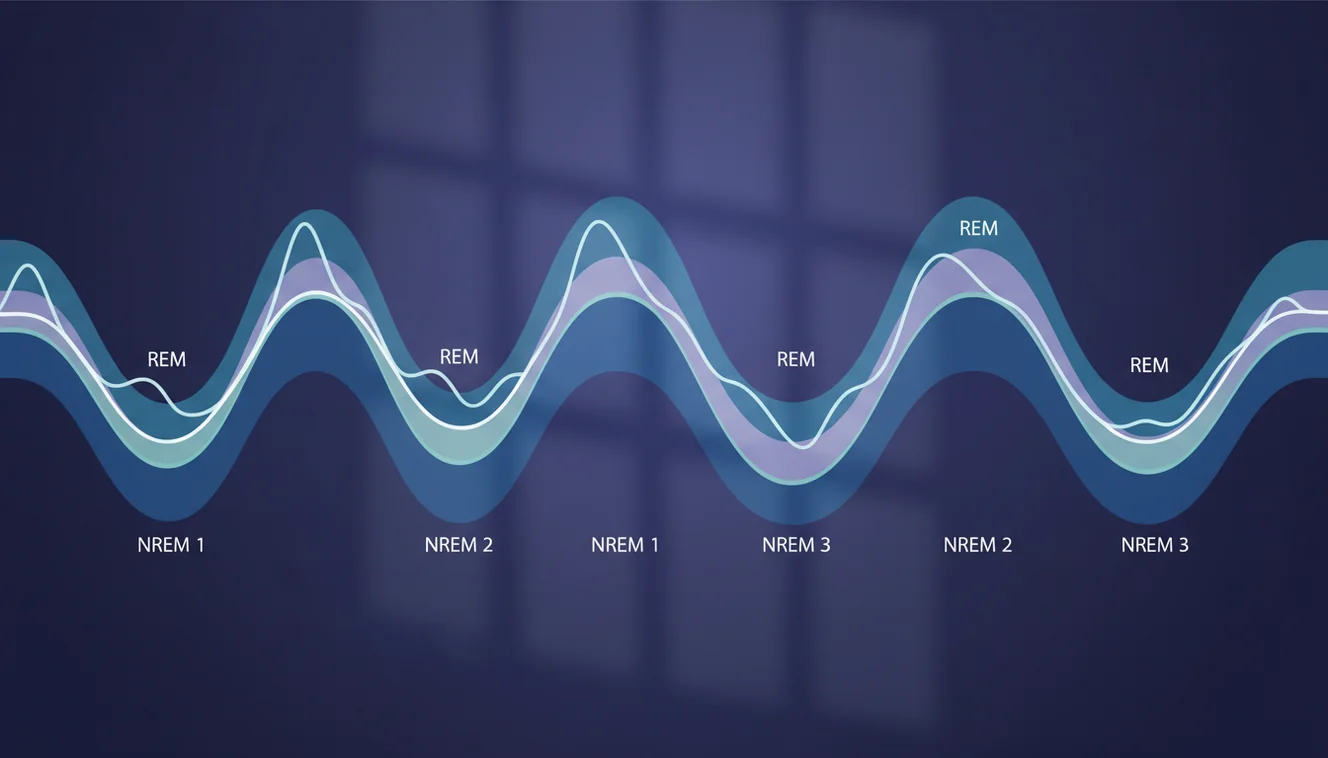
NREM Stages 1–3
NREM (non-rapid eye movement) covers the first three stages. Stage 1 is the transition: you’re drifting off, easily woken. Stage 2 is light sleep; your heart rate and temperature drop, and brief bursts of brain activity called sleep spindles occur. This stage takes up about half of total sleep time.
Stage 3 is deep or slow-wave sleep. Your brain waves slow down, and the body does most of its physical repair: tissue growth, immune function, energy restoration. You’re hardest to wake here, and if you do wake, you feel the worst. Deep sleep is front-loaded in the night; the first two cycles have the most.
REM Sleep
REM sleep is when most dreaming happens. Your eyes move rapidly behind closed lids, your brain is active, and most skeletal muscles are paralyzed, a safeguard so you don’t act out dreams. REM supports memory consolidation, learning, and emotional processing.
REM periods get longer as the night progresses. The first REM block might be 10 minutes; the last can stretch to an hour. If you cut your sleep short, you lose REM. That’s why sleeping six hours instead of eight can leave you feeling emotionally off or forgetful even if you don’t feel physically tired. For better sleep quality, pairing cycle awareness with sleep sounds can help you fall asleep faster and stay in rhythm.

The 90-Minute Cycle Structure
The 90-minute figure is an average. Some people run 70 minutes; others closer to 120. The sequence is consistent: light sleep → deeper light sleep → deep sleep → light sleep again → REM. Then the cycle repeats.
To use this for waking: count backward from your desired wake time in 90-minute blocks. Need to be up at 6:00? Try 10:30 p.m. (7.5 hours) or 12:00 a.m. (6 hours). Add 15–20 minutes for falling asleep. A reliable alarm at the right time helps; so does a consistent bedtime. For more on shifting your schedule, see how to wake up early.
Ideal Wake Times and Sleep Debt
Ideal wake times are those that land you between cycles. Sleep debt is the accumulated shortfall when you consistently sleep less than you need. It doesn’t fully reset in one long night; it builds over days and weeks. Paying it down means consistent, adequate sleep for several nights.
If you’re chronically short on sleep, cycle timing matters less than getting enough total sleep. Once you’re caught up, aligning wake times with cycle boundaries becomes useful. Heavy sleepers often need a stronger nudge (see alarm clock for heavy sleepers), and the right alarm sounds can help.

Circadian Rhythm and Mid-Cycle Waking
Your circadian rhythm is your internal 24-hour clock. It influences when you feel sleepy and when you’re alert. Light is the main cue: bright light in the morning shifts you earlier; screens at night push you later. Aligning your sleep schedule with your rhythm makes cycle timing more effective.
When you wake mid-cycle, especially from deep sleep or REM, you get sleep inertia: grogginess, slow thinking, the urge to lie back down. It can last 15 minutes to an hour. The fix is either waking between cycles or using light, movement, and a solid morning routine to shake it off. A timer for short rests can help you avoid napping into a full cycle and waking groggy.
Sleep Cycle App
An online alarm works for basic wake-ups, but if you struggle with grogginess or oversleeping, a dedicated app can help. Alarmy offers loud alarms and mission-based dismissal, so you can’t silence it without engaging. Pair it with cycle-based bedtimes and consistent wake times for best results.
Understanding your sleep cycle is the first step. From there, consistent timing, light exposure, and a reliable alarm make the difference between waking refreshed and waking wrecked.
Related Guides
Frequently Asked Questions
A sleep cycle is a repeating pattern of NREM (stages 1–3) and REM sleep, lasting roughly 90 minutes. You go through four to six cycles per night.
One full cycle is about 90 minutes on average, though it can range from 70 to 120 minutes. Later cycles tend to have more REM.
Waking during deep sleep (NREM stage 3) or mid-REM often causes grogginess and sleep inertia. Waking between cycles, during light sleep, feels easier.
REM (rapid eye movement) sleep is when most dreaming occurs. Your brain is active, eyes move, and muscles are mostly paralyzed. It supports memory and emotional processing.
NREM stage 1 is light dozing; stage 2 is deeper light sleep with sleep spindles; stage 3 is deep or slow-wave sleep, when the body repairs and restores.
Count backward from your desired wake time in 90-minute blocks. For 6:00 a.m., try 7.5 hours (5 cycles) or 6 hours (4 cycles). Consistency matters more than perfection.
An alarm clock app with sleep tracking monitors movement overnight and wakes users during light sleep near the set alarm time. This approach reduces grogginess compared to waking during deep NREM stage 3.
Adults typically need 1-2 hours of deep sleep per night, which occurs mostly in the first half of the night. Deep sleep decreases with age. Getting enough total sleep (7-9 hours) generally ensures adequate deep sleep.
Feeling tired after 8 hours usually indicates waking during deep sleep, poor sleep quality from disruptions, or a sleep disorder. Aligning wake time with the end of a 90-minute cycle and maintaining consistent sleep times helps.
Sleep debt is the cumulative difference between the sleep a person needs and the sleep they actually get. Losing 1 hour per night for a week creates 7 hours of sleep debt. Recovery requires multiple nights of adequate sleep, not a single long sleep.
Wake up with a louder, smarter alarm
Use ClockWise to set loud alarms that support your ideal wake time. For online alarms, keep the browser tab open so the alarm can ring.
Get ClockWise App